
Last updated November 15, 2026
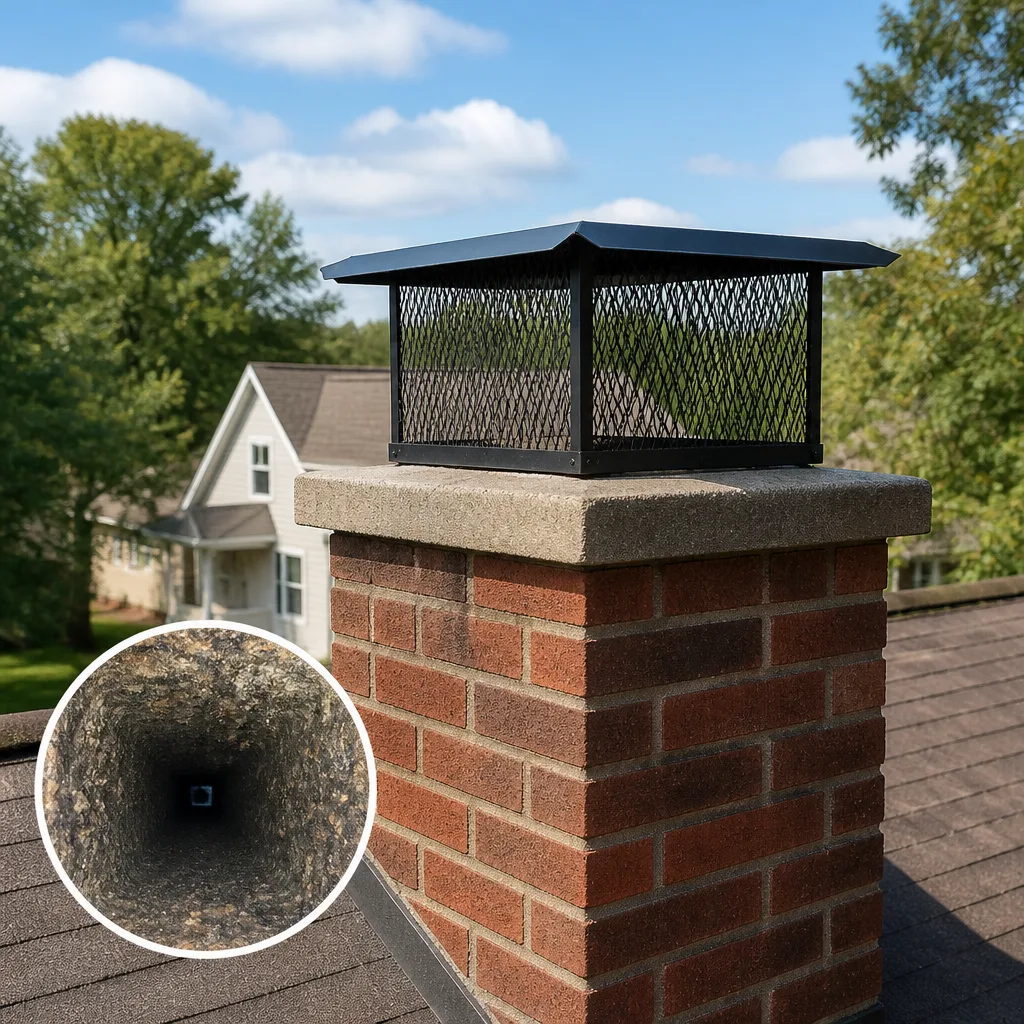 Sweep & inspection
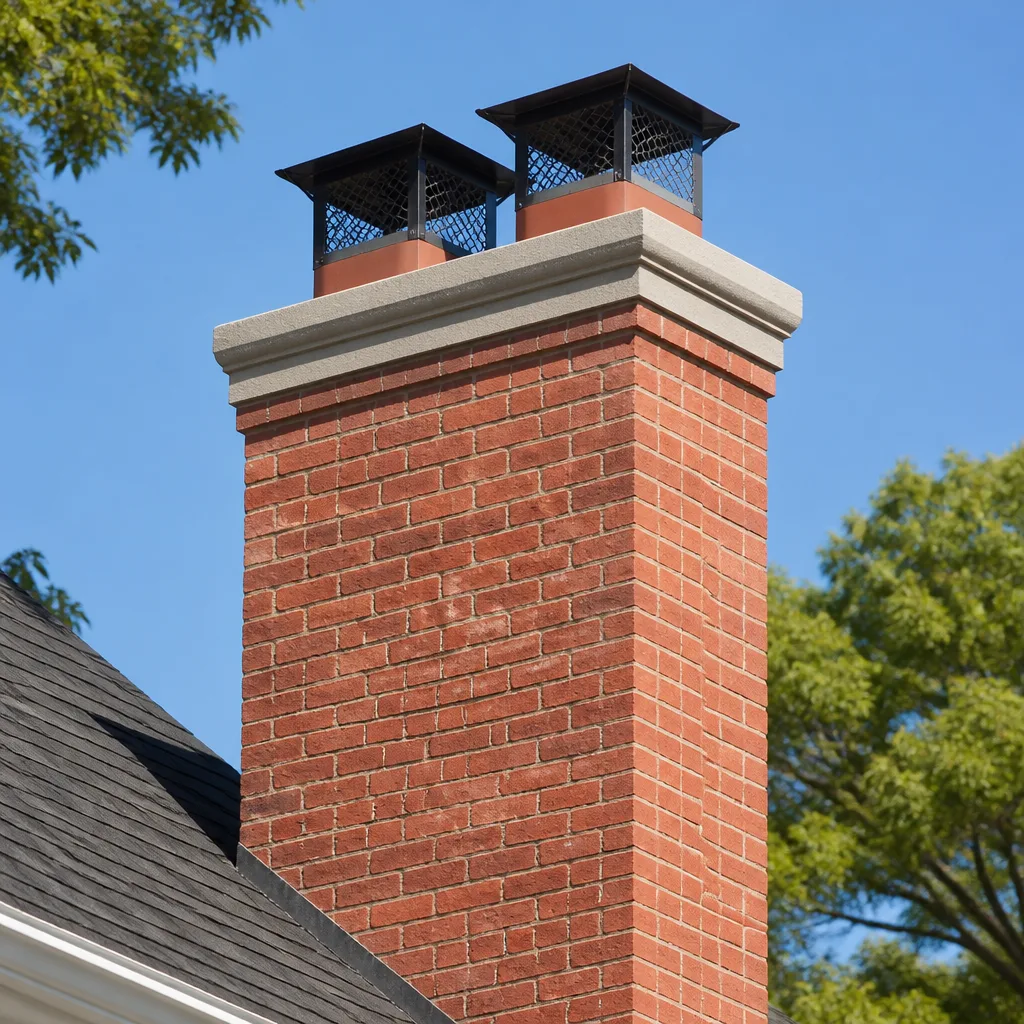 Caps & crowns
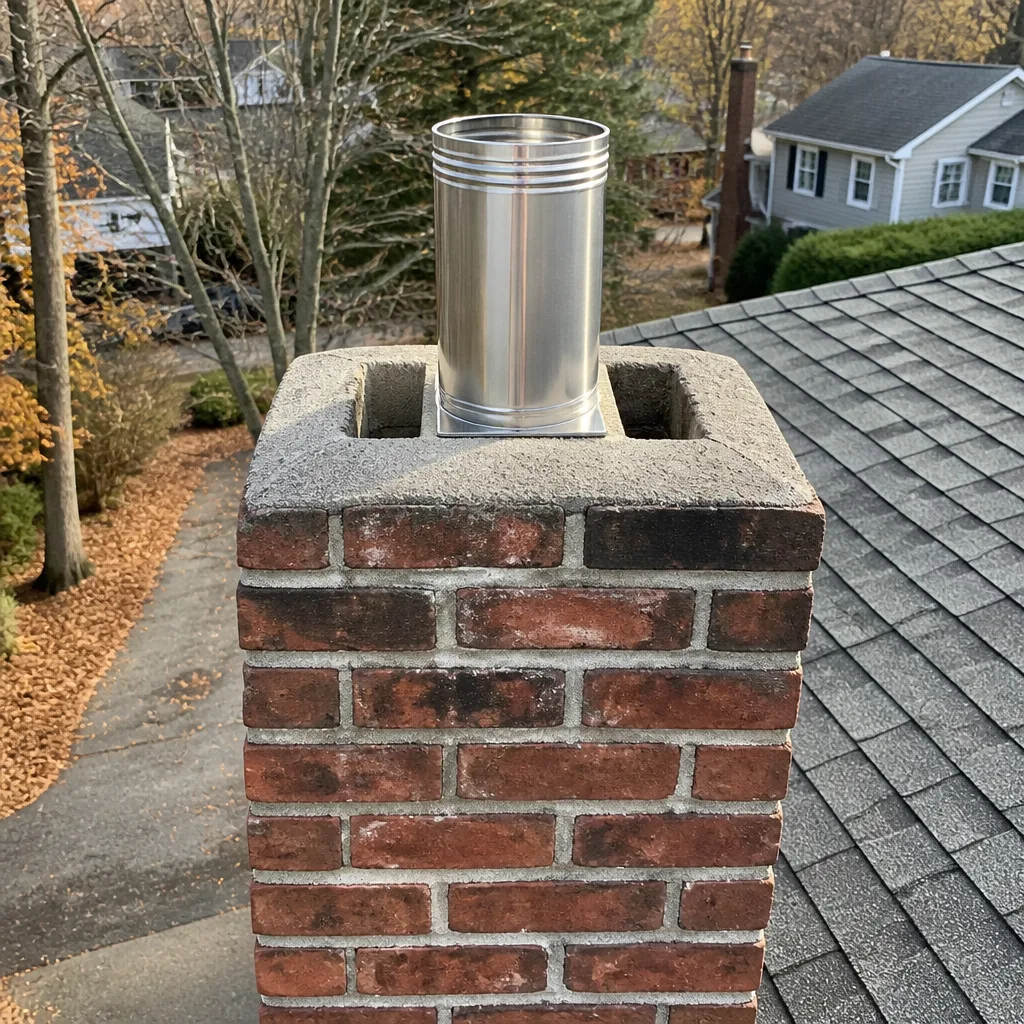 Flue relining
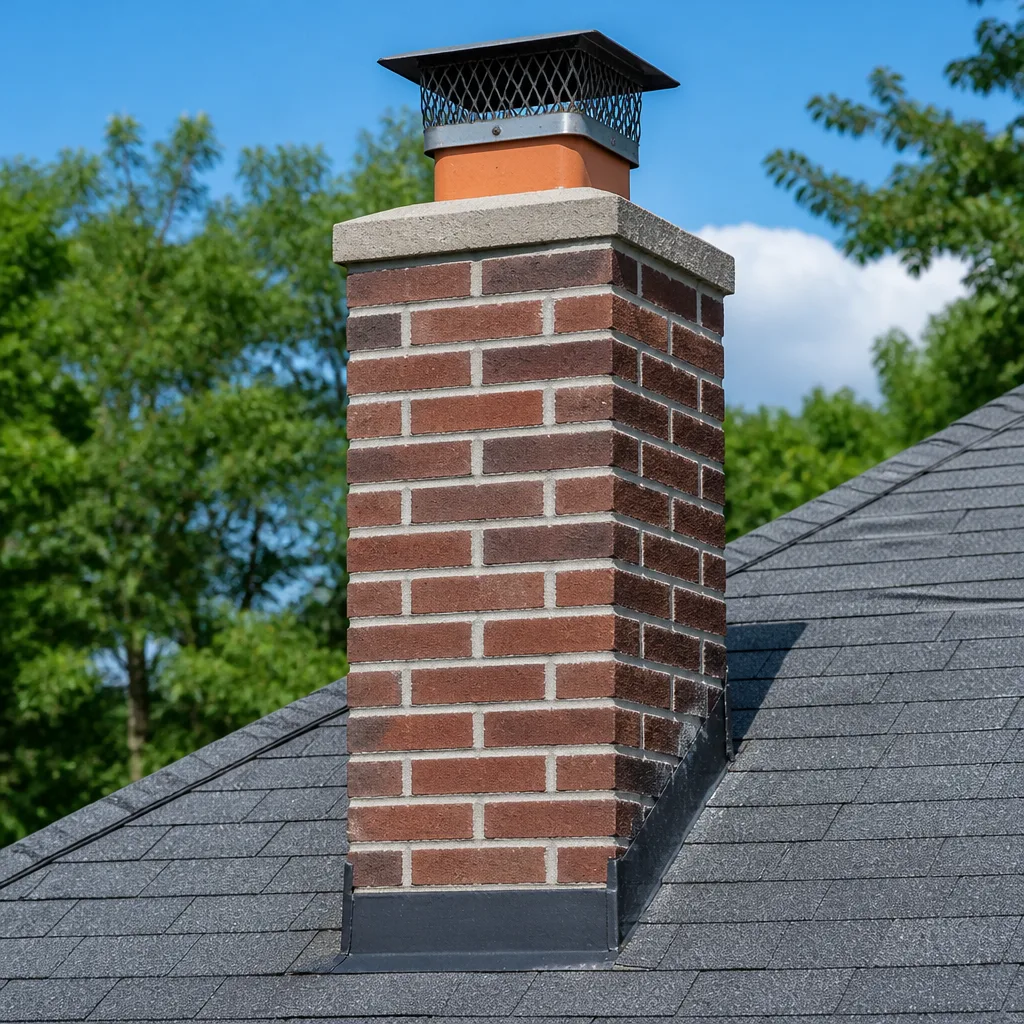 Masonry repair
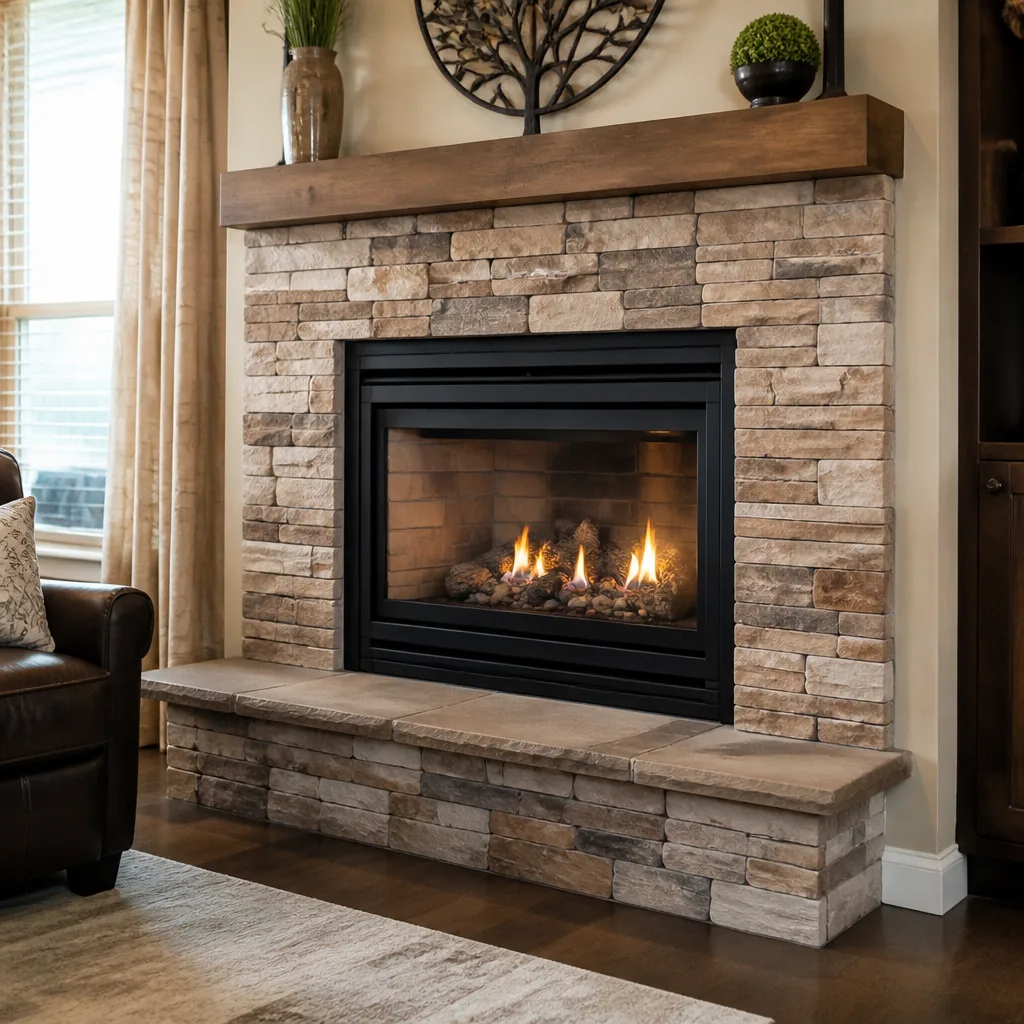 Gas fireplace service
Level 1 sweep and inspection to the NFPA 211 annual standard - flue, crown, cap, and flashing checked and photographed
Chimney sweep logs do not sweep chimneys. They loosen some creosote - which then falls where a brush and vacuum still have to collect it.
Choosing the Right Chimney Cleaning Brand: A Buyer’s Guide for Carrollton
When a contractor quotes a chimney cap, most homeowners hear a price for labor and figure the metal is an afterthought. It isn’t. In Carrollton’s climate, a galvanized steel cap can rust through in three to five years, while a stainless steel cap from a professional product line can outlast the chimney structure it protects. The brand your contractor installs says more about the repair than the installation itself. This guide explains the product categories where brand selection matters, the material specs that hold up in North Texas, and the questions to ask before you hire. Our technicians have up to 15 years of experience, and we’ve seen what happens when the wrong part goes on the right chimney.
Quick Answer
Choosing the right chimney brand means selecting professional-grade product lines for caps, liner systems, crown coatings, and waterproof sealants, then confirming your contractor sources from those lines rather than a hardware store shelf. The brands a contractor uses reveal whether the repair is built to last or patched to pass. In Carrollton, look for installers who name their product lines openly and can explain the material specs behind each choice.
Styles & brands we work with
- Sweep & inspection
- Caps & crowns
- Flue relining
- Masonry repair
- Gas fireplace service
Table of Contents
- What “Brand” Actually Means in Chimney Work
- The Four Product Categories Where Brand Selection Matters Most
- Why Professional Chimney Sealants Outperform Hardware Store Masonry Sealer
- The Material Specs That Matter in North Texas
- How to Ask Your Contractor Which Brands They Use
- Full-Service Specialist vs. Sweep-Only Service: How Sourcing Changes
- How to Read a Chimney Repair Estimate
- Common Mistakes to Avoid
What “Brand” Actually Means in Chimney Work
When chimney professionals talk about brands, they don’t mean the name on the truck or the logo on a business card. They mean the product lines used for liners, sealants, caps, and waterproofing. A chimney is a system, and every part of that system is sourced from a manufacturer with its own engineering standards. The brand a contractor chooses tells you which standard they’re building to.
This is a different conversation than most homeowners expect. You might ask a contractor which company they work for. The more useful question is which product lines they stock or order, and why. A sweep who shows up with generic sealant from a home center is doing one kind of repair. A specialist who uses HeatShield for liner resurfacing and DuraFlex for full relining is doing another. Both may call it a fix. Only one is built for the next twenty years.
In our experience working Carrollton chimneys, the brand question surfaces the answer to a bigger one: does your contractor treat repair as a materials decision or a labor decision? A contractor who sources from professional lines has already made the materials decision, and the repair reflects it. The homeowner benefits because the part, not just the install, is what holds up.
Why the brand conversation belongs in chimney work
Chimneys are exposed to heat, moisture, and thermal cycling on every burn cycle. A part that might survive a decade on a sheltered wall may fail in five years on a chimney crown. Professional product lines are engineered for that environment. Hardware-store substitutes are engineered for general masonry use. The gap shows up years later, when the cheap cap has rusted and the sealant has cracked. By then the homeowner has forgotten the brand question and is paying for the redo.
The Four Product Categories Where Brand Selection Matters Most
Not every chimney part is equally brand-sensitive. Some materials are commodities, and any competent contractor will get a similar result. Four categories are different. In these, the product line is the difference between a permanent repair and a repeat visit.
1. Chimney caps and covers
A cap keeps rain, animals, and debris out of the flue. It also takes the worst of the sun and weather. The brand question here is about metal quality and design. Galvanized steel is the low-cost choice and rusts through quickly in North Texas humidity. Stainless steel from a professional line, or a fabricated cover from a maker like Gelco or Famco, is built for a much longer service life. The labor to install a cap is roughly the same either way. The part is where the longevity lives.
2. Liner systems
The liner is the chimney’s internal pipe, and it carries combustion gases out of the house. When a liner fails, the choice is resurfacing or replacement. Resurfacing uses a specialist system like HeatShield, which applies a new surface to the existing flue. Replacement uses a flexible liner, and DuraFlex is the kind of professional product line a chimney specialist carries. A general handyman can’t install either properly. This is the category where brand selection is most consequential, and where a sweep-only service has to bring in someone else.
3. Crown coatings
The crown is the concrete cap at the top of the chimney. It sheds water away from the masonry. When it cracks, water enters the structure and does the expensive damage. Crown repair products range from basic mortar to engineered coatings built for movement and weather. The brand matters because the crown moves with temperature, and a coating that can’t flex will crack again.
4. Waterproof sealants
Waterproofing is the quiet category. A chimney that gets waterproofed properly lasts longer than one that doesn’t, and the sealer brand is the whole story. We cover this in the next section because the gap between professional and retail products is larger here than anywhere else.
Why Professional Chimney Sealants Outperform Hardware Store Masonry Sealer
Hardware-store masonry sealer is designed for general use on brick and concrete. Chimney sealant is designed for one specific job: protecting a heated, wet, thermally cycling masonry structure. Those are not the same product, even when both come in a five-gallon bucket with a similar label.
The difference is in vapor permeability. Masonry has to breathe. A sealer that traps moisture inside the brick doesn’t protect the chimney; it traps water where it can freeze, spall, and degrade the mortar from within. Professional chimney sealants are formulated to repel liquid water while still allowing vapor to escape. The American industry standard for this is a breathable water-repellent coating, and ChimneySaver is the recognized name in that category. A general handyman sealing a chimney with hardware-store product can actually make things worse.
We’ve seen this play out in Carrollton on masonry chimneys that get hit with summer storms and winter moisture in the same year. The sealant that performs is the one engineered for chimney masonry, not the one engineered for a driveway. When a contractor can name their sealant line and explain vapor permeability, that’s a signal they understand the material. When the answer is “whatever the supplier had,” that’s a signal too.
What to look for in a sealant choice
- Vapor-permeable formulation, not a film-forming sealer
- Manufacturer rated for chimney and masonry use, not general concrete
- A named product line your contractor can point to
- Application matched to the masonry type, not one bucket for every job
The Material Specs That Matter in North Texas
Every product category has its own engineering priorities, but in Carrollton the priorities cluster around three environmental stresses. Winters here are mild compared to northern climates, so frost damage isn’t the primary concern. The bigger stressors are sun, heat cycling, and humidity. A product that handles all three will hold up. A product that handles only one won’t.
UV resistance
North Texas gets strong, direct sun for much of the year. Anything on the chimney crown or cap is exposed to UV on every clear day. Sealants that break down under UV chalk, crack, and fail within a few seasons. Stainless steel and engineered coatings resist UV degradation where galvanized steel and basic masonry products don’t. A cap installed in full sun in Carrollton faces that exposure every day it sits there.
Thermal cycling tolerance
Every time the fireplace is used, the chimney heats and cools. Over a season, that’s hundreds of cycles. Materials expand and contract with each one. The crown coating that can’t flex will crack at the joint. The liner material that can’t handle temperature swing will separate. Flexible liner systems and crown products built for movement are the right choice. Rigid or brittle products are the wrong one, even if they cost less up front.
Humidity resistance
Carrollton sits in a humid climate for a good part of the year. Metal parts rust, masonry absorbs moisture, and organic growth can take hold on shaded surfaces. Materials that resist moisture intrusion and don’t corrode easily are worth a higher price. The stainless steel cap is the obvious example. The less obvious one is the waterproof sealant, which has to shed water without trapping it.
A quick comparison
- Galvanized steel cap: low cost, rusts through in three to five years in this climate
- Stainless steel cap: higher cost, built to outlast the chimney structure
- Generic masonry sealer: can trap moisture, cracks under UV
- Vapor-permeable chimney sealant: sheds water, allows the masonry to breathe
- Basic mortar crown patch: cracks with thermal cycling
- Engineered crown coating: flexes with movement, resists UV and water
How to Ask Your Contractor Which Brands They Use
The brand question is a screening tool. Most contractors will answer it honestly, and the quality of the answer tells you what you need to know. Here’s how to ask it without turning the conversation into an interrogation.
- Start with the part, not the brand. “What cap do you recommend for this chimney, and why?” The answer reveals whether the contractor is recommending a product or a price point.
- Ask for the product line by name. “Which manufacturer’s cap is that?” If the answer is a store name or a vague “professional grade,” press for a specific product line. A specialist will name it.
- Ask about the metal or the material. “Is that stainless steel or galvanized?” The follow-up should explain the trade-off in service life, not just cost.
- Ask about the sealant. “What do you use to waterproof the masonry, and is it vapor-permeable?” If the answer isn’t specific, that’s a flag.
- Ask how the repair is warranted. A contractor who stands behind their materials usually does so in writing.
- Ask what happens if the part fails early. A professional who sourced a professional line will have an answer. A contractor who picked up a generic part won’t.
In our experience, the right answers sound specific. HeatShield for liner resurfacing. DuraFlex for full relining. Gelco or Famco for caps and covers. Olympia Chimney for the accessories that round out the system. Any of these names, explained in context, tells you the contractor knows their materials. Vague answers aren’t automatically disqualifying, but they mean you should keep asking.
Full-Service Specialist vs. Sweep-Only Service: How Sourcing Changes
A sweep-only service sweeps. When you need a liner, a crown repair, or a cap, that service either refers you out or subcontracts the work. That’s not a criticism of sweeping. Sweeping is the right tool for the routine job, and a good sweep is worth having. The problem comes at the repair stage, where two different contractors are now responsible for the same chimney.
A full-service chimney specialist handles sweep, repair, and inspection under one roof. That changes the sourcing picture in a way that’s easy to miss. A specialist who does the repair has to stand behind the materials, so they source from professional lines and keep them in their standard workflow. They also see what’s actually happening in the chimney, which informs the material decision. When the same specialist who inspected the liner installs the new one, the product choice reflects the condition they observed.
Why this matters for the Carrollton homeowner
When a sweep-only service hands off repair work, the handoff often loses material context. The sweep noted a cracked crown. The subcontractor installs a crown patch that may or may not fit the crack pattern. Nobody’s wrong, but the product decision was made without the full picture. A specialist avoids that gap because the sweep, the inspection, and the repair are one service relationship.
We’ve built our service around this because it’s the version that serves the homeowner. Carrollton Chimney Cleaning provides sweep, inspect, and repair as one relationship. When we recommend a DuraFlex liner or a HeatShield resurfacing, the recommendation comes from the inspection, not from a sales call. That’s the difference a full-service specialist makes.
How to Read a Chimney Repair Estimate
An estimate is a materials list plus a labor scope. Most homeowners focus on the bottom line and skip the materials. That’s backwards. The materials line is where the brand selection lives, and it’s where the long-term cost of the job is decided.
Here’s what a useful estimate looks like when you read it closely:
- Named product lines. A professional estimate names the cap, the sealant, the liner system. “Chimney cap” alone isn’t enough. “Stainless steel cap from a professional line” is.
- Material and grade. Stainless steel vs. galvanized. Vapor-permeable sealant vs. film-forming. The grade should be explicit.
- Scope of work. Is the crown fully replaced or patched? Is the liner resurfaced or replaced? The scope determines whether the product is doing the right job.
- Warranty language. Is the warranty on labor only or on the product too? A contractor confident in their materials usually warrants both.
- Written estimate, not a verbal number. The written estimate should be the final price for the specified scope. Ask what could change and why.
A chimney repair estimate is a document, not a quote. If your contractor hands you a single number on a business card, ask for the written version. If the written version doesn’t name the product lines, ask for the revision. A specialist will provide both without hesitation.
Common Mistakes to Avoid
- Choosing on price alone. A cap that costs less up front can cost more over ten years because it rusts through and gets replaced. Compare service life, not just the day-one number.
- Accepting “professional grade” without a name. “Professional grade” is a marketing phrase. A named product line is a verifiable fact. Ask for the name and look it up.
- Letting a handyman seal the masonry. A general handyman using hardware-store sealer can trap moisture inside the chimney. That’s worse than leaving the masonry unsealed. Sealant selection is a specialist decision.
- Assuming any sweep can do repair. Sweeping and relining are different skill sets. A sweep-only service subcontracts the repair, and the material selection gets lost in the handoff.
- Skipping the inspection to save on the service call. Inspection is where the material decisions get made. Without it, you’re guessing about the liner, the crown, and the cap. A camera inspection and photo report should come with the sweep.
- Installing a new cap on a failing crown. The cap sheds water away from the crown, but it can’t save a crown that’s already cracked. The repair order matters. Get the crown addressed before the cap goes on.
- Trusting a verbal warranty. A warranty on paper is a warranty. A verbal promise from a contractor who didn’t name the product is a hope. Ask for it in writing.
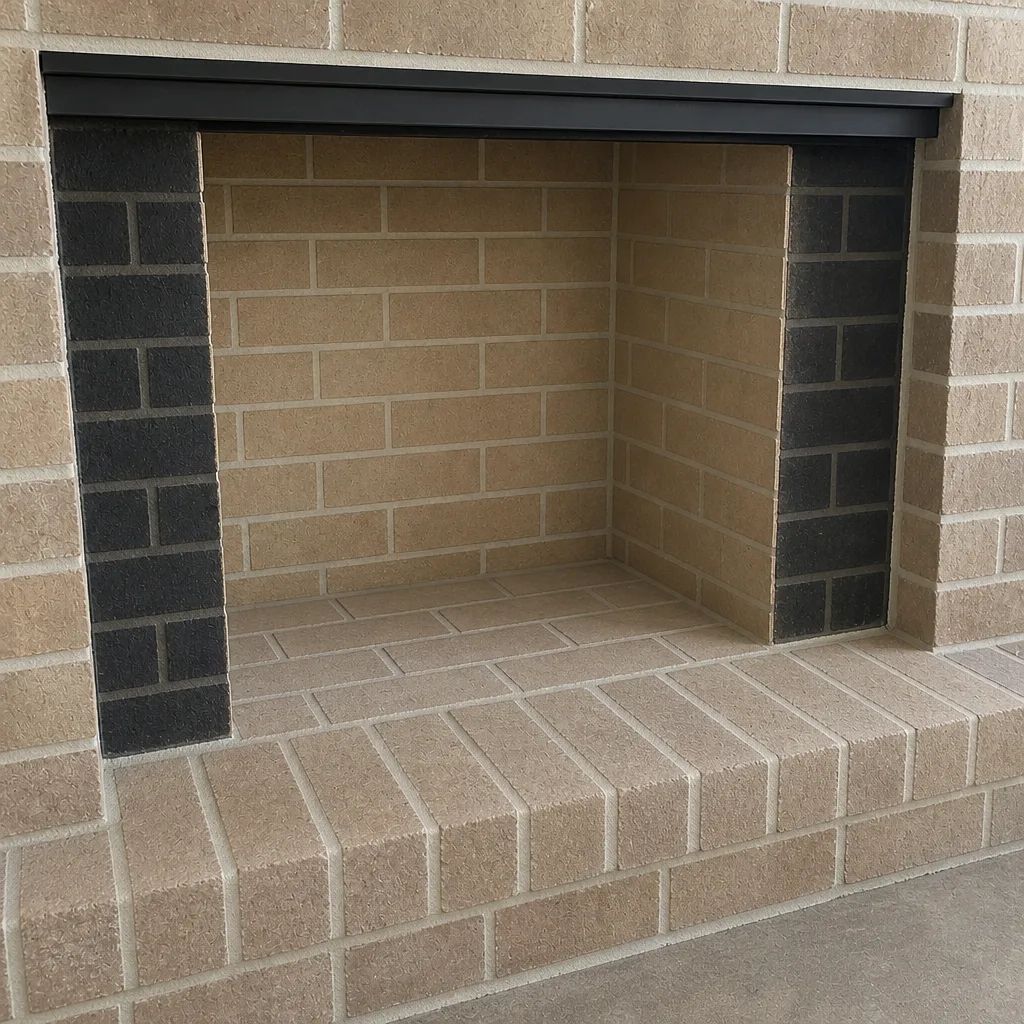
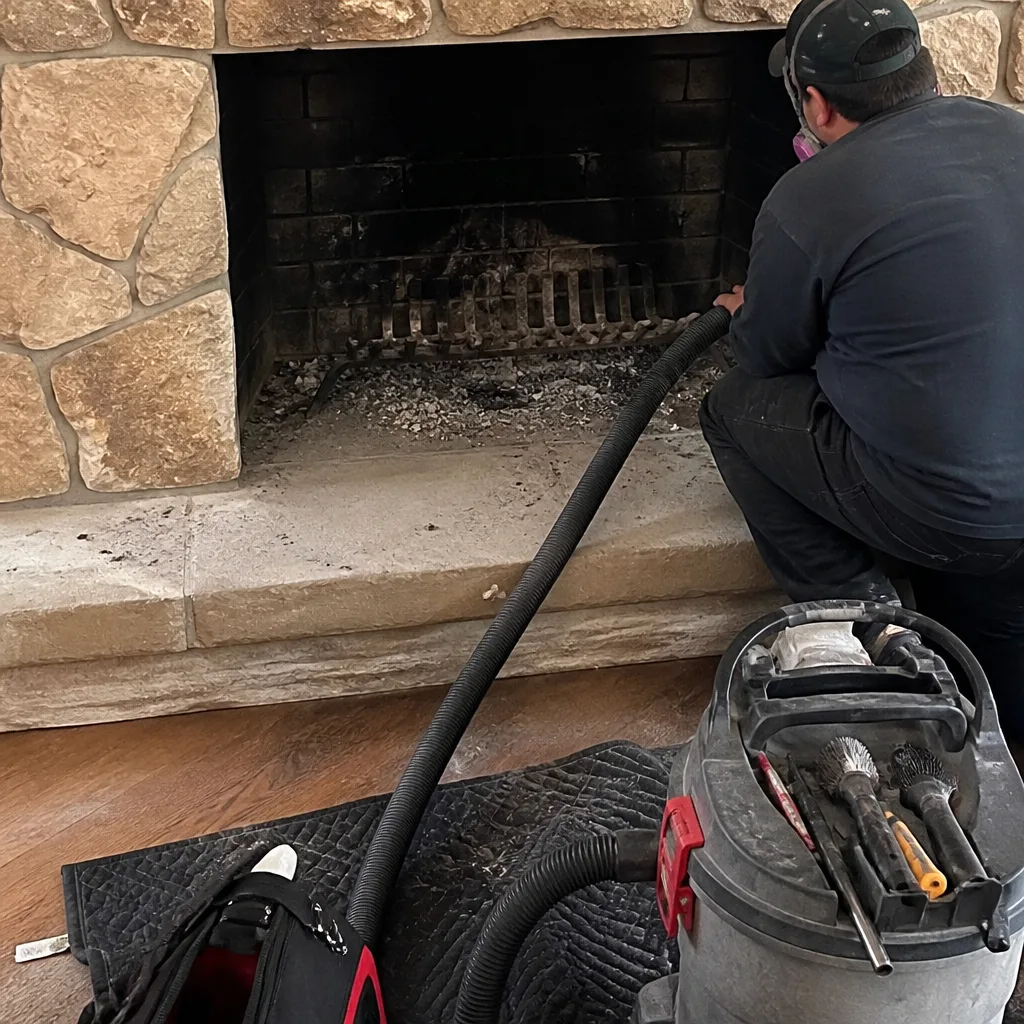
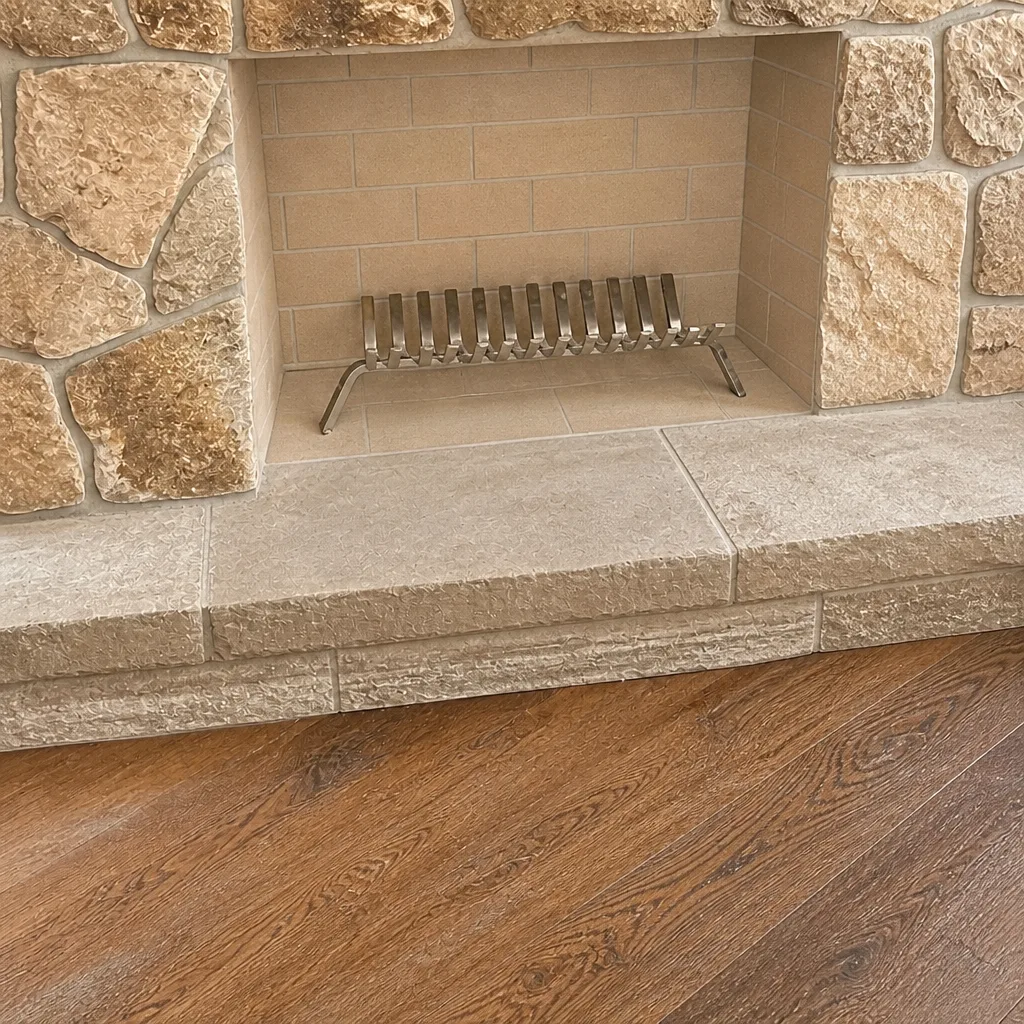
See the difference
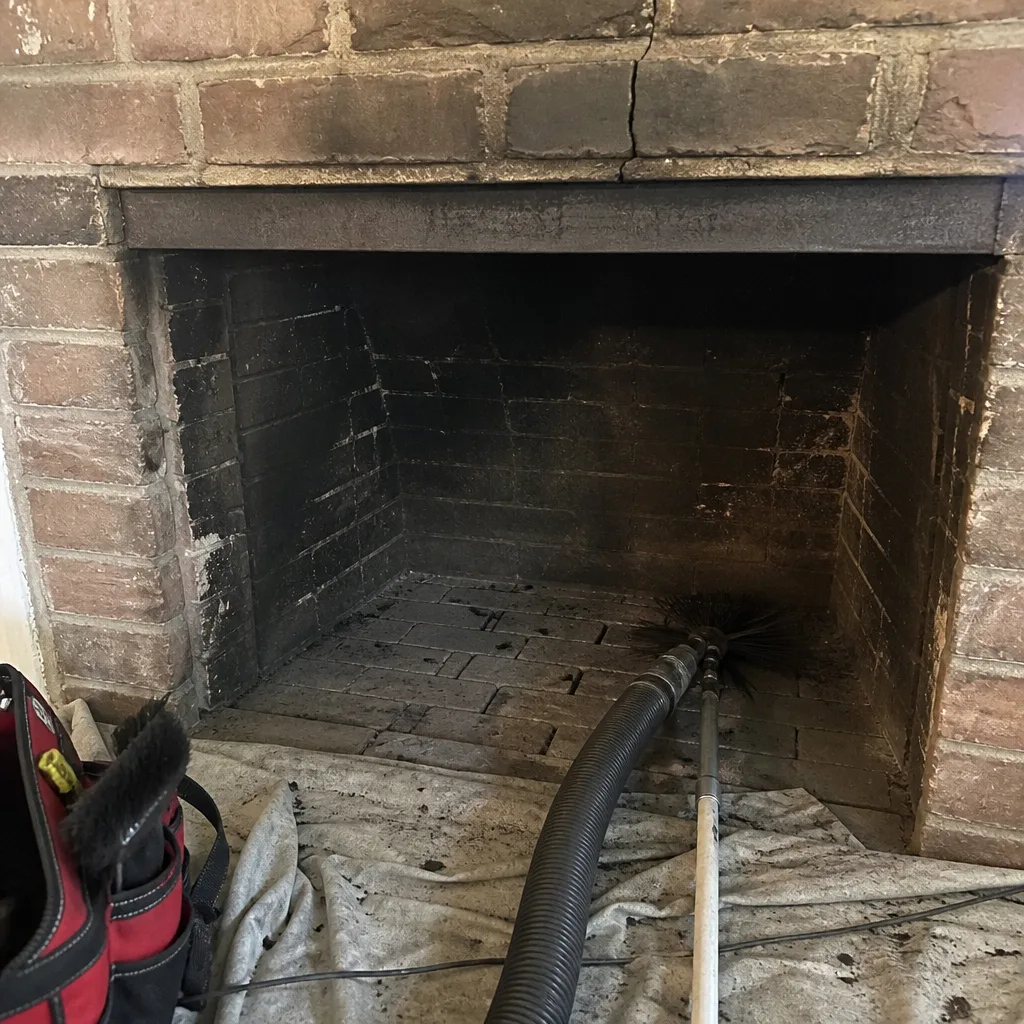 Before
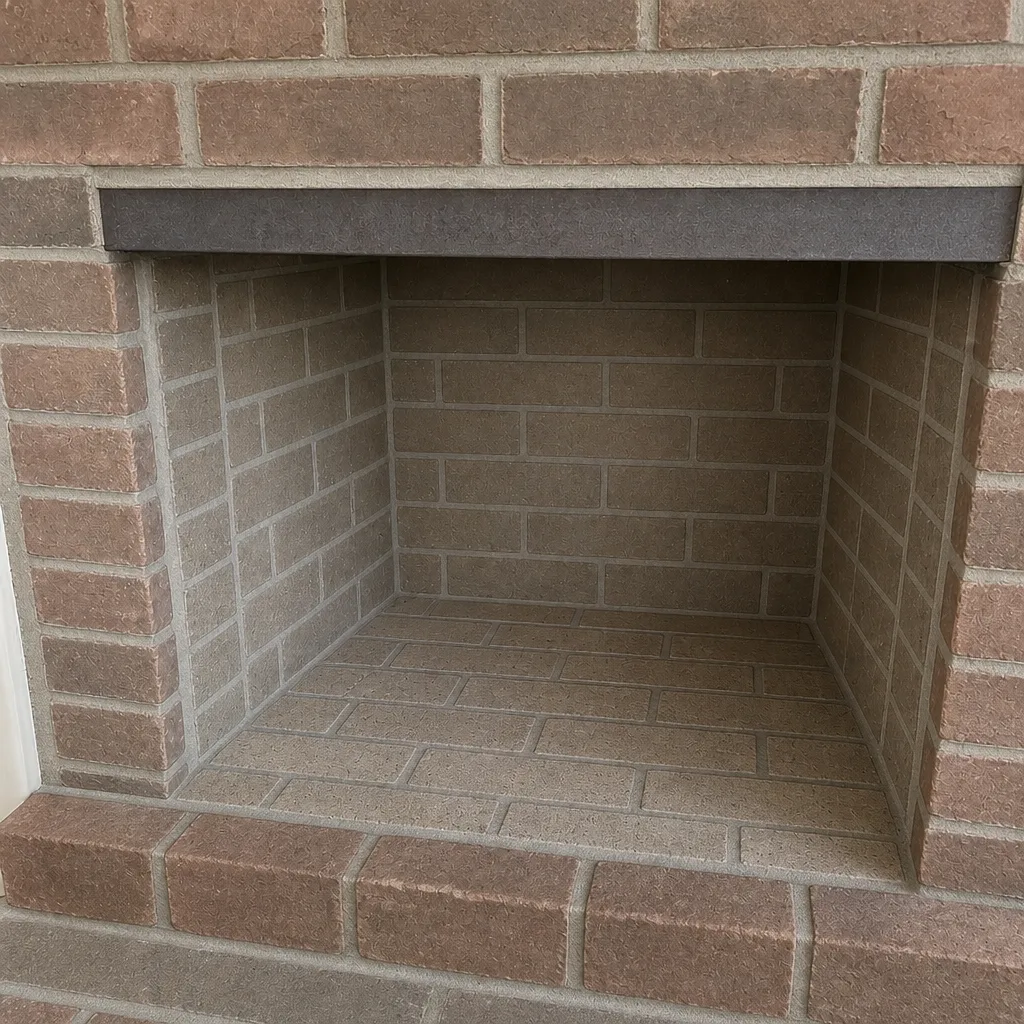 After
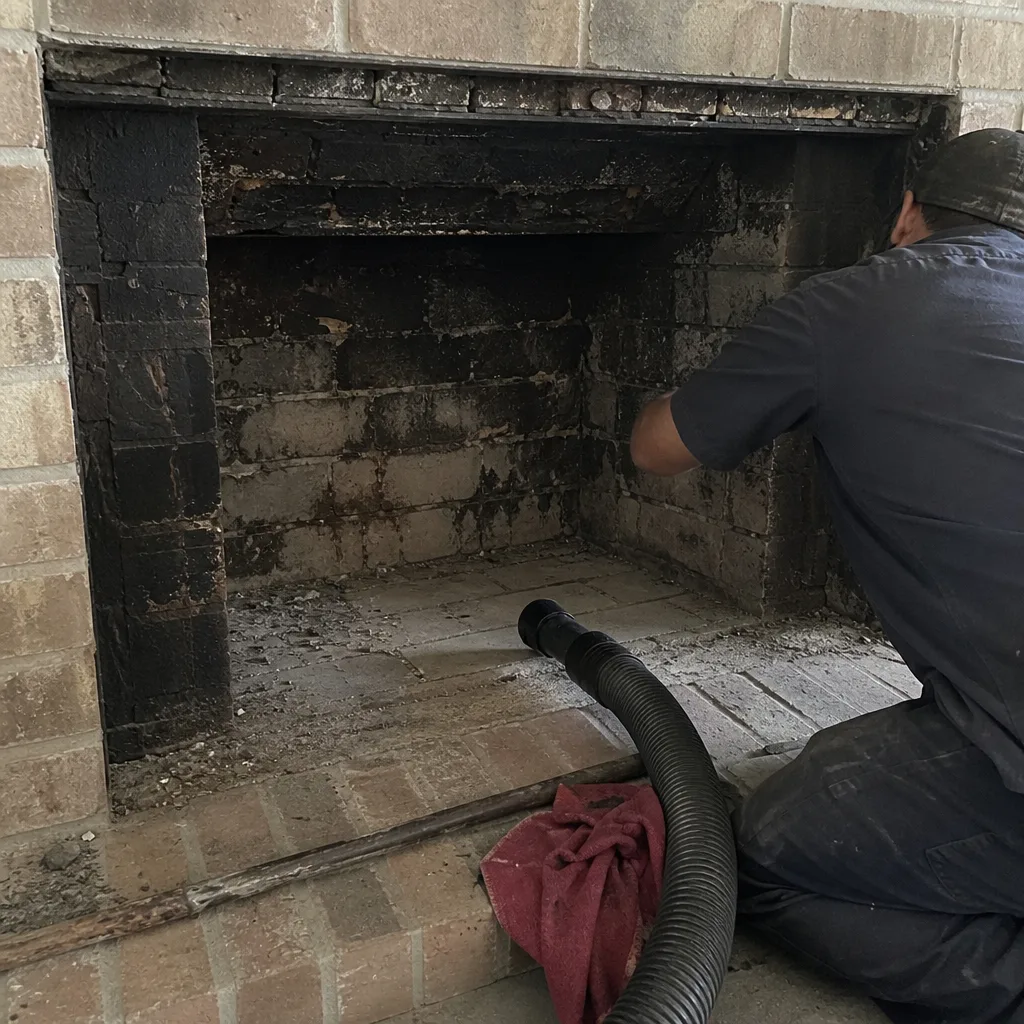 Before
 After
 Before
 After
When to Call a Professional
Some chimney work is routine and can wait for the next scheduled service. Other conditions call for a professional visit sooner. The signs to watch for are draft problems, odors in the room when the fireplace isn’t in use, visible damage to the cap or crown, water staining on the masonry, and any crack in the flue that you can see. If your last sweep or inspection was more than a year ago, a professional visit is the starting point. Safety is the reason to act, not urgency selling. A trained chimney professional can see liner damage that a homeowner can’t, and the recommendation will reflect the actual condition of the system. We identify what’s wrong before we recommend what to fix. Carrollton Chimney Cleaning offers free estimates in Carrollton. Call (833) 946-9706. We answer 24/7. Fast dispatch from 7am to 7pm, Sunday through Friday.
Frequently Asked Questions
Look for contractors who name professional product lines openly, such as HeatShield for liner resurfacing, DuraFlex for full relining, and Gelco or Famco for caps and covers. The names matter because they signal trade-level sourcing rather than hardware-store substitutes. A contractor who can explain why they use a specific line is demonstrating the material knowledge that separates permanent repairs from temporary fixes. If the answer is vague, ask a follow-up. Call (833) 946-9706 for an exact quote. Estimates are free.
Yes, and the difference comes from vapor permeability. Professional chimney sealants, such as those from ChimneySaver, repel liquid water while allowing the masonry to breathe. Generic hardware-store sealer can trap moisture inside the brick, which is worse than leaving it unsealed. A specialist can tell you which product is appropriate for your masonry type and climate. In Carrollton’s humid summers and mild winters, the correct sealant choice is the one that lets the chimney dry out. Call us for an exact quote. Estimates are free.
A galvanized cap in Carrollton’s climate typically rusts through in three to five years. That’s because the humidity and sun exposure here are hard on galvanized steel. A stainless steel cap from a professional line, or a fabricated cover from a maker like Gelco or Famco, lasts much longer. The install labor is similar. The part is where the difference lives. If you’re replacing a cap, the material upgrade is worth the conversation. Call (833) 946-9706 for an exact quote on a cap replacement.
Ask which product line they’ll use and what material grade it is. A permanent repair names the product, matches the material to the condition, and comes with a warranty on the part. A temporary fix uses generic parts and a verbal guarantee. The difference shows up in writing on the estimate. If the written estimate doesn’t specify the product line, ask for a revision before you book. Call (833) 946-9706 to schedule a free estimate and a camera inspection with a photo report.
No. Liner installation is a specialist job that uses products the general trade doesn’t stock or know how to apply. HeatShield resurfacing requires specific application knowledge, and DuraFlex flexible liner systems require training on the material. A handyman who offers to do it is likely doing it wrong. Relining is the repair where brand selection matters most, and it’s the repair a sweep-only service usually subcontracts. Call us for a quote. Estimates are free.
A useful estimate names the product lines, states the material and grade, describes the scope of work, and includes warranty language on both labor and materials. The written estimate is the final price for the specified scope. If the estimate is a single number without a materials list, it’s not a complete estimate. Ask for the written version and read the parts list before you decide. Call (833) 946-9706 for an exact quote on your Carrollton chimney repair.
The Bottom Line
The brand a contractor installs is the repair. A stainless steel cap outlasts a galvanized one, a professional chimney sealant protects the masonry where generic sealer traps moisture, and HeatShield or DuraFlex liner work is built to last rather than patched to pass. A Carrollton homeowner who asks the brand question, reads the materials line on the estimate, and picks a full-service specialist over a sweep-only service gets a repair that reflects the actual condition of the chimney. That’s the whole point. Your chimney is a system, and treating it like one is the difference between a service call and a repair. Call (833) 946-9706 for a free estimate. We answer 24/7. Fast dispatch from 7am to 7pm, Sunday through Friday.
Learn more about our chimney sweep and chimney repair services, or read about the Carrollton area we serve. If you’re comparing contractors in a nearby community, the same material standards apply: ask the brand question, read the estimate, and look for a specialist who names their product lines.
Written by the team at Carrollton Chimney Cleaning.