
Last updated November 15, 2026
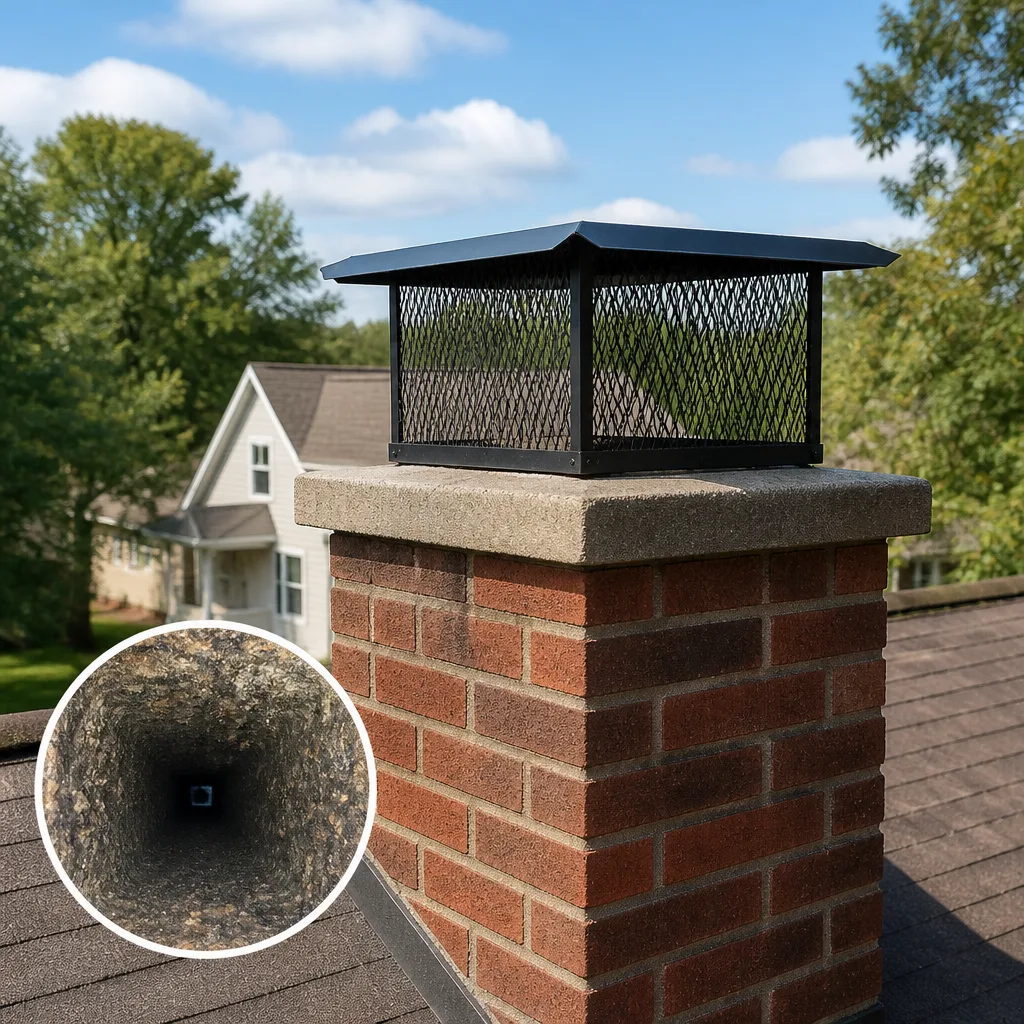 Sweep & inspection
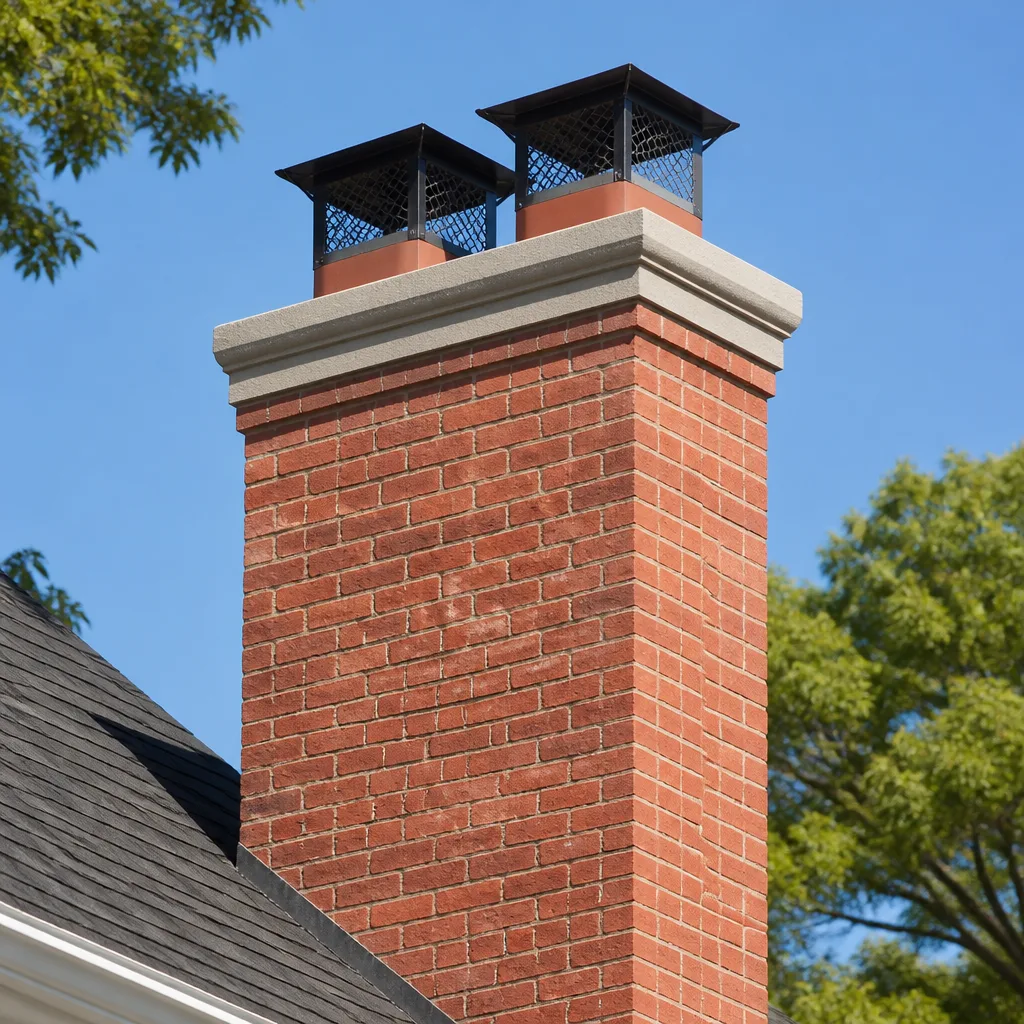 Caps & crowns
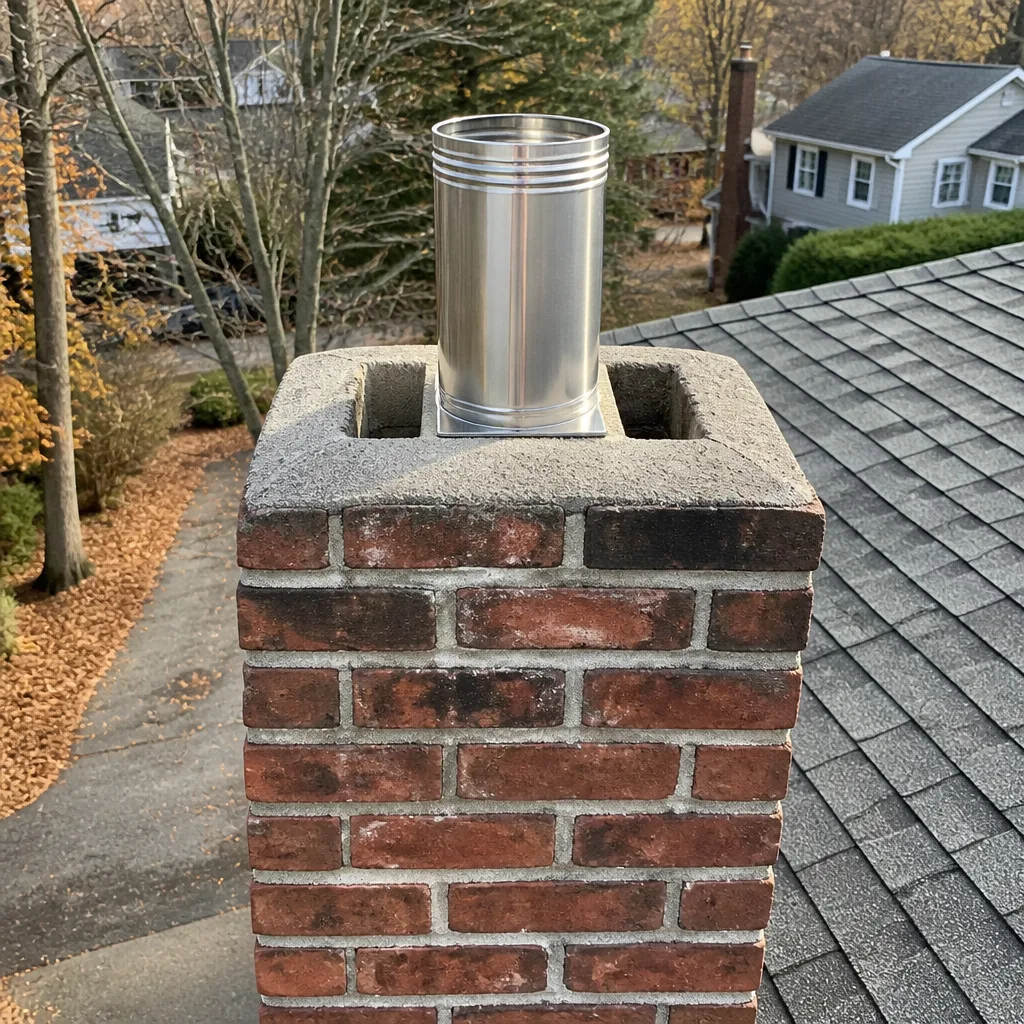 Flue relining
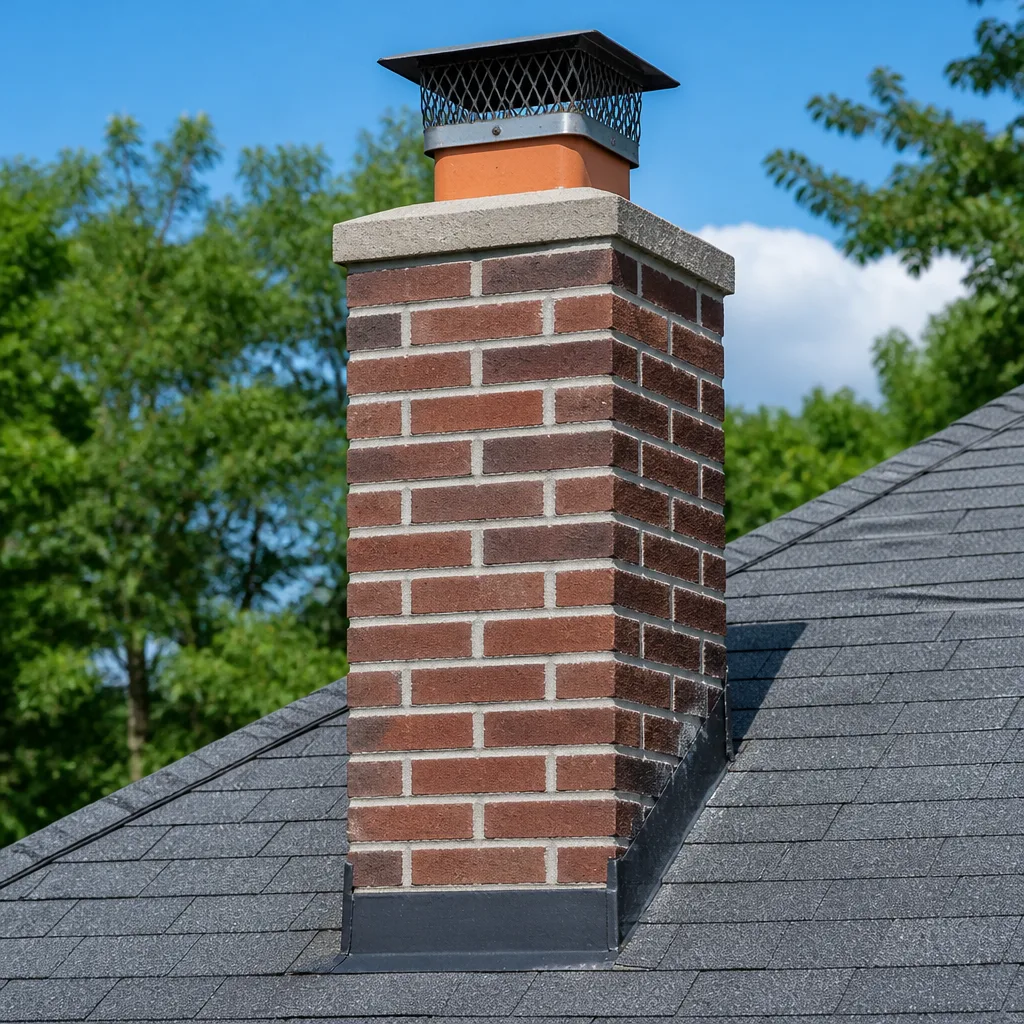 Masonry repair
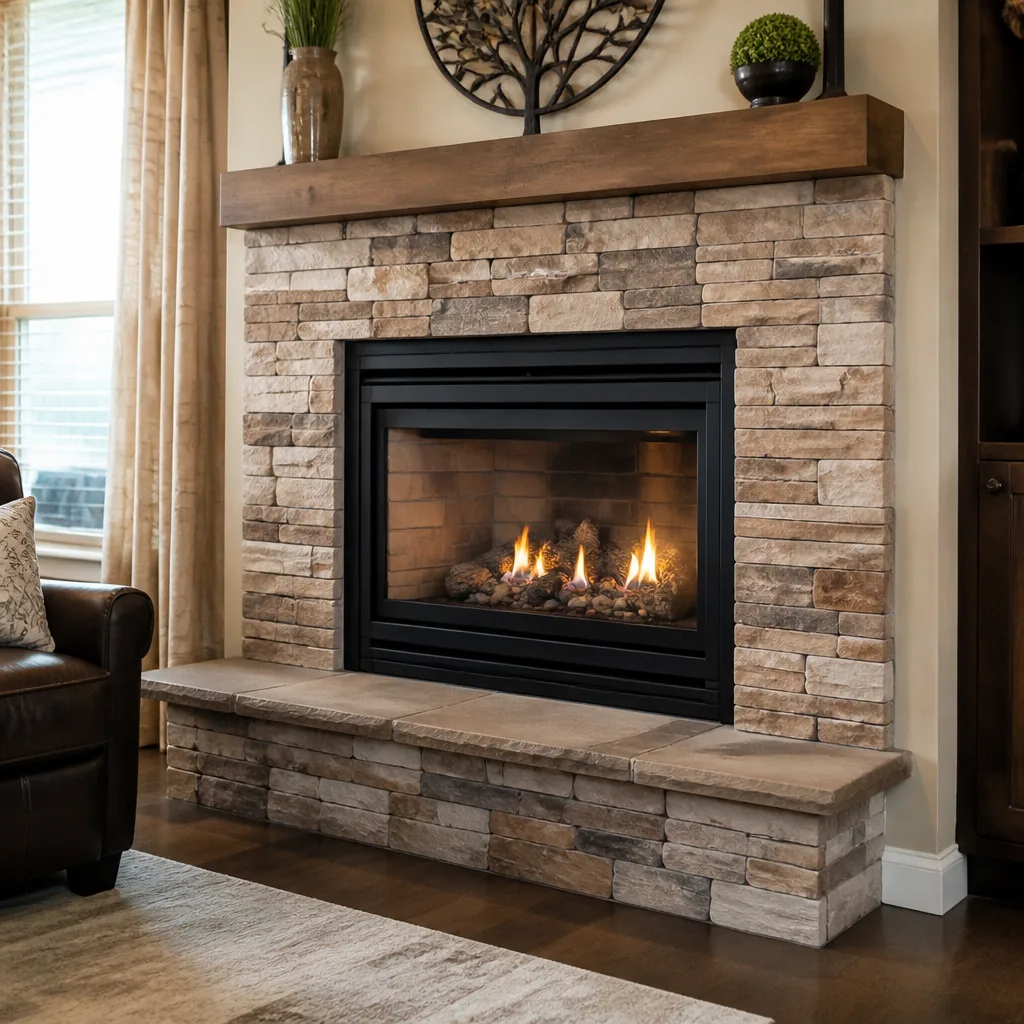 Gas fireplace service
Level 1 sweep and inspection to the NFPA 211 annual standard - flue, crown, cap, and flashing checked and photographed
Chimney sweep logs do not sweep chimneys. They loosen some creosote - which then falls where a brush and vacuum still have to collect it.
Chimney Sweep Maintenance Checklist for Carrollton Homeowners
Most chimney advice you’ll find online was written for places with five months of hard winter. Carrollton doesn’t work that way. Our burn season is short and intense, which means the other ten months are when the real damage happens. Moisture creeps into mortar, animals nest in flues that sit unused, and debris piles up on caps through spring storms. By the time you light the first fire, the problems are already there. This guide is a year-round checklist built around how chimneys actually age in Carrollton, Texas, not around national averages. You’ll get pre-season, mid-season, and post-season steps, a clear line between what you can check yourself and what needs a professional, and a simple way to log it all in case your insurer ever asks.
Quick Answer
A chimney maintenance checklist for Carrollton should cover three phases: pre-season checks after storm season (cap, crown, flashing, visible flue), mid-season checks you can do from the firebox (draft, creosote buildup, damper operation), and post-season moisture protection before the humid spring. Anything involving the roof, the liner, or structural repair should be handled by a trained chimney professional. Book a sweep and inspection once a year, ideally in late summer or early fall, before the first fire.
Styles & brands we work with
- Sweep & inspection
- Caps & crowns
- Flue relining
- Masonry repair
- Gas fireplace service
Table of Contents
- Why a Carrollton Chimney Ages Differently
- Pre-Season Checklist: After Storm Season, Before the First Fire
- Mid-Season Checklist: What You Can Check From the Firebox
- Post-Season Checklist: Protecting the Chimney Through Humid Spring and Summer
- What a Homeowner Can Check vs. What Requires a Professional
- How to Log Chimney Maintenance for Insurance and Resale
- Building a Year-Round Chimney Schedule for Your Carrollton Home
- Common Mistakes to Avoid
Why a Carrollton Chimney Ages Differently
Carrollton sits in a stretch of North Texas where the weather does two things well: it dries things out fast, and it soaks them fast. Summers are long and hot. Spring and fall bring heavy rain and hail. Between the wet and dry cycles, masonry and mortar go through constant expansion and contraction, and over time that movement opens small cracks. Once a crack opens, the next rain gets in, and the damage accelerates from there.
Then there’s the burn season itself. Most Carrollton homeowners get somewhere around 60 usable fireplace nights a year. That’s a short window compared to colder parts of the country, but it’s intense. When the fires do happen, they tend to run hot and long, which produces creosote at a rate that surprises people who assume a short season means less buildup. It doesn’t. It just concentrates the same buildup into fewer months.
And the other ten months matter more than most people think. A chimney that sits idle for ten months is a chimney where animal nesting, moisture intrusion, and mortar erosion do their worst work, quietly, with nothing burning to draw your attention to it. The Carrollton climate is the reason this checklist is organized around storm season, the burn season, and the humid stretch in between, instead of around the calendar you’ll find on most generic chimney guides.
One more local wrinkle: hail and wind-driven rain. A typical North Texas storm season sends debris, hail, and driven rain against the part of the chimney most homeowners never look at directly, the crown and the cap. Those are the two components that fail most often in Carrollton chimneys, and they’re the two that protect everything below them. If either fails, water comes in through the flue instead of running off the roof.
Pre-Season Checklist: After Storm Season, Before the First Fire
The pre-season window in Carrollton is roughly late August through October. That’s after the worst of the summer storms and before you need the fireplace. This is the phase where a professional inspection earns its cost, because it catches damage while there’s still plenty of time to fix it before you burn.
Work through these items in order:
- Look at the cap and spark arrestor from the ground. Binoculars are fine. What you want to see is that the cap is still attached, the screen isn’t crushed, and nothing is nesting inside it. A cap bent by wind or hail is common after a North Texas storm season.
- Check the crown. The crown is the sloped concrete or mortar surface on top of the chimney that sheds water away from the flue. From the ground, look for visible cracks or missing chunks. A cracked crown is the single biggest source of water intrusion we see.
- Inspect the flashing where the chimney meets the roof. This is hard to see from the ground, so this one usually happens during a professional inspection. Failed flashing shows up as a damp stain on the ceiling or chimney breast inside the house.
- Look at the exterior masonry. Walk around the chimney at ground level and look up the sides. Crumbling mortar joints, white powdery staining, or brick spalling all suggest moisture has been getting in.
- Open the firebox and look up. With a strong flashlight, look at the smoke chamber and the flue above it. You’re looking for heavy, shiny creosote, visible cracks in the flue tiles, or debris like leaves and twigs.
- Test the damper. It should open and close fully without sticking. A damper that won’t close completely is an energy loss and a draft problem.
- Book the professional sweep and inspection. This is the step most homeowners skip, and it’s the one that catches the problems your ground-level checks can’t see. A proper inspection includes a camera look at the flue, which is the only way to know what condition your liner is actually in.
That camera inspection is the core of a useful chimney sweep visit. Anything found in there should be shown to you on the screen before anyone recommends a repair, so you’re making a decision based on what the camera saw, not on someone’s word for it.
Mid-Season Checklist: What You Can Check From the Firebox
Once you’re burning, most of what you need to check can be done from the firebox without climbing anything. What you’re looking for are changes: a draft that suddenly feels weaker, smoke that rolls out of the fireplace instead of going up, a damper that sticks, or creosote building faster than you’d expect. Those changes are the early signals of a problem, and catching them mid-season means you can stop burning and get the chimney looked at before it gets worse.
Check these from inside the house, with the fire fully out and the firebox cold:
- Draft check. Before lighting a fire, hold a lit match or a piece of smoldering paper near the open damper. The smoke should be pulled steadily up. If it drifts into the room or stalls, you have a draft problem.
- Damper operation. Open and close it fully. It should move smoothly and seat completely.
- Creosote buildup in the firebox throat. Shine a light up into the smoke chamber. A thin, flaky layer is normal. Thick, shiny, or tar-like buildup means it’s time to stop burning and get a sweep.
- Smoke roll. Smoke rolling out into the room when you first light a fire can mean a blocked flue, a closed damper, or a draft problem. If it happens consistently, stop using the fireplace.
- Ash pit and doors. If your fireplace has an ash dump, make sure it’s not overflowing or blocked. Check that the glass doors seal well; a poor seal hurts draft and efficiency.
- Smoke and carbon monoxide detector. Confirm both are working. This isn’t a chimney component, but a chimney problem is one of the reasons a CO detector matters, so make sure it’s functioning.
You can safely self-assess all of that. What you should never do mid-season is climb up on the roof to look at the top, or reach up into the flue with a brush, especially on a hot or wet roof. A trained technician standing on a roofer’s ladder can see more in two minutes than you can safely see in an afternoon.
Post-Season Checklist: Protecting the Chimney Through Humid Spring and Summer
This is the phase most homeowners never think about, and in Carrollton it’s the one that matters most. Once the burn season ends, the chimney sits idle through the wettest, most humid stretch of the year. Everything you do here is about keeping water out of a structure that’s designed to be dry.
Work through these in the spring, after your last fire:
- Get a professional sweep after the burn season. The creosote that builds during the season will sit in the flue all summer. Creosote absorbs moisture, and soaking creosote against a flue liner is exactly the wrong combination. Getting it cleaned out after the last fire is far better than leaving it there until fall.
- Check the cap is still on and intact. Spring storms are a common reason caps come loose. A missing or bent cap means rain, hail, and animals have direct access to the flue all summer.
- Confirm the crown is watertight. If the crown is cracked, this is the season it will let in the most water. Addressing it before summer prevents the trickle from becoming a long soaking.
- Look for animal intrusion. Birds and squirrels love an idle flue. Listen for scratching or chirping sounds from inside the chimney, and check the cap screen for tears.
- Keep the firebox dry. If you see signs of dampness or a musty smell in the firebox through summer, water is getting in from somewhere above. That’s worth investigating before the next fire season.
- Close the damper. An open damper all summer means humid air flows up the flue and deposits moisture against the liner, and air-conditioning loss through the fireplace.
The cap matters a lot here. We work with chimney repair components from brands like Olympia Chimney and Famco specifically because a cap or top-sealing damper that actually fits and seals fixes the root cause, not just the symptom. A flimsy cap that rusts out in a season is a temporary fix at best.
What a Homeowner Can Check vs. What Requires a Professional
One of the most useful distinctions in chimney maintenance is which tasks you can safely do yourself and which ones need a trained eye and the right tools. Getting this wrong in either direction causes problems: doing too much risks injury or damage, and doing too little lets small issues grow into expensive repairs. Here’s the clearest way we can lay it out.
Safe for a careful homeowner to check:
- Ground-level view of the cap, crown, and exterior masonry.
- Firebox, damper, and smoke chamber condition from inside the house.
- Draft check with a match or smoldering paper.
- Smoke and carbon monoxide detector operation.
- Evidence of water intrusion: stains, dampness, or musty smells.
- Animal sounds or nesting evidence from inside the chimney.
Requires a professional:
- Anything involving climbing or working on the roof.
- The flue liner, including inspection and any relining work.
- Structural repair of the crown, flashing, or masonry.
- Creosote removal beyond a light surface layer.
- Camera inspection of the flue interior.
- Cap and top-sealing damper installation.
- Any repair to a gas insert or an oil flue system.
If you’re not sure which category something falls into, that’s usually the sign to call. We identify what’s wrong before we recommend what to fix, and if work can safely wait until next season, we’ll tell you that too. That’s easier to say when the inspection is done with a camera that shows you the evidence directly. Our technicians have up to 15 years of experience, and a full chimney inspection includes the camera look, so you’re not guessing.
One safety note worth stating plainly: creosote in the flue and the structural parts of the chimney are not do-it-yourself territory. Creosote is highly flammable, and a flue fire is dangerous. If your firebox check turns up heavy creosote, stop using the fireplace and get it cleaned by a trained chimney professional before you burn again.
How to Log Chimney Maintenance for Insurance and Resale
A maintenance log is one of the least glamorous parts of chimney care and one of the most valuable. If a chimney-related insurance claim ever comes up, or if you sell your Carrollton home, having a record of every sweep, inspection, and repair makes a real difference in how a claim or an inspection is handled. Insurers and buyers both want to see that the chimney has been maintained, not just that it looks fine on the day they look at it.
Keep the log simple. A note on your phone or a page in a household binder is enough. For each service, record:
- The date of the service.
- Who did the work, and what company.
- What was done: sweep, inspection, repair, cap install, relining.
- What was found: creosote level, liner condition, cap or crown condition, any water intrusion.
- Any photos or the camera inspection report, if provided.
- Any recommended follow-up and the date it’s due.
The single most useful line item is the camera inspection report. If a sweep recommends relining or a major repair, that report is the documentation that shows why. If a claim is ever filed, an insurer will want to know whether the condition existed before a loss event, and a dated inspection report is the clearest way to establish that. When we run an inspection, we hand over the camera findings, so you have that record in hand.
For resale, a documented chimney history is a strong signal to a buyer’s inspector. A chimney that has a clean maintenance record and shows it usually clears inspection without the haggling that comes from a chimney nobody has looked at in years.
Building a Year-Round Chimney Schedule for Your Carrollton Home
The easiest way to actually keep up with chimney maintenance is to stop thinking of it as a once-a-year task and start thinking of it as a three-touch schedule tied to the burn season. Here’s a simple annual calendar that works for most Carrollton homes.
- Late summer, before the first fire. Book a full sweep and inspection. Do your own ground-level check of cap, crown, and exterior masonry. Test the damper and the smoke and CO detectors.
- Monthly during the burn season. Run the mid-season firebox checks: draft, creosote, damper, and smoke roll. Stop burning if anything changes significantly.
- After the last fire, in spring. Get a post-season sweep. Confirm cap and crown are intact. Check for animal intrusion and dampness. Close the damper for the summer.
- Any time a major storm hits. After a North Texas hail or wind event, do a quick ground-level check of the cap and chimney top for new damage.
- Once a year, update the log. Enter every service and finding into your maintenance record.
That’s the whole schedule. It’s not complicated, and the professional pieces of it are two visits a year at most, one sweep after the season and one sweep and inspection before it. For most Carrollton homes, that’s the right rhythm. Homes with heavy use, a gas insert, or an oil flue system may need a slightly different cadence, which is something a proper inspection will tell you.
The brand lineup matters here because it determines what’s possible in a single visit. We work with professional-grade materials, not hardware-store substitutes. DuraFlex flexible liner systems mean we can handle a full reline when the flue needs it. HeatShield resurfacing is used for repairing the liner when it’s still structurally sound but damaged. Olympia Chimney and Famco caps and tops solve the water and animal entry problems at the source. That means sweep, inspection, and repair are handled by one specialist, and you don’t need to chase down a second contractor mid-season.
Common Mistakes to Avoid
- Waiting until the first cold snap to book a sweep. Everyone in Carrollton wants their chimney checked the week the weather turns. Booking in late summer or early fall gets you on the schedule ahead of the rush and catches problems while there’s still time to fix them.
- Treating the cap as optional. A missing or bent cap after a storm lets in rain, debris, and animals all year. If the cap is compromised, fix it before the humid season, not after the damage is done.
- Climbing on the roof to “have a look.” A wet or steep North Texas roof is not a safe place to be. The cap and crown are visible from the ground with binoculars, and the rest can be checked by a professional.
- Burning through a smoke roll problem. If smoke rolls into the room instead of going up the flue, the chimney is telling you something is blocked or the draft is compromised. Stop burning and get it diagnosed. It’s not a problem that fixes itself.
- Skipping the post-season sweep. Creosote sitting in the flue all summer absorbs moisture and holds it against the liner. The post-season sweep is the one most often skipped and the one that protects the liner through the humid months.
- Hiring a general handyman for liner work. A liner repair or reline requires specialized knowledge and products, not just a ladder and a brush. The materials make the difference: HeatShield and DuraFlex are designed for chimney liner work specifically, and most general contractors don’t stock them.
- Not keeping any record. A chimney with no maintenance history is a liability at resale and a headache on a claim. A simple dated log solves that at almost no effort.
See the difference
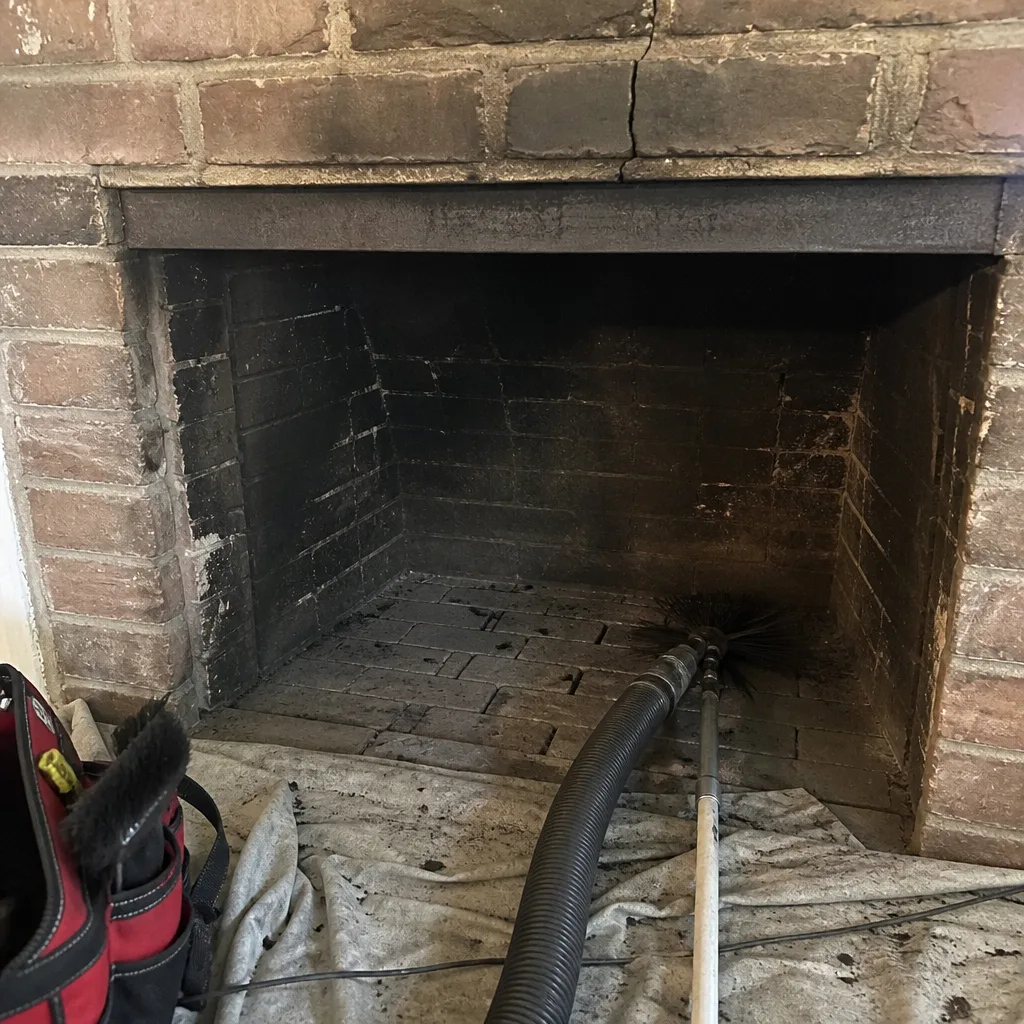 Before
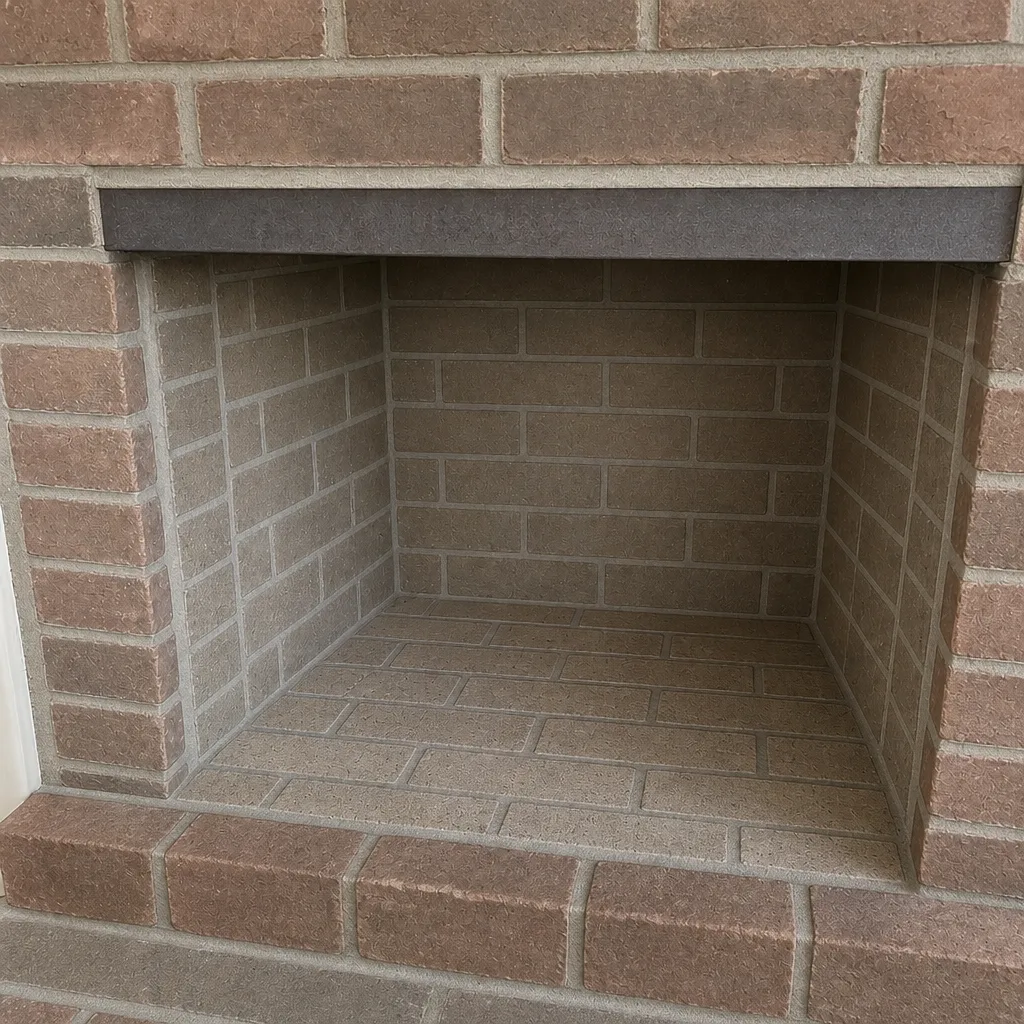 After
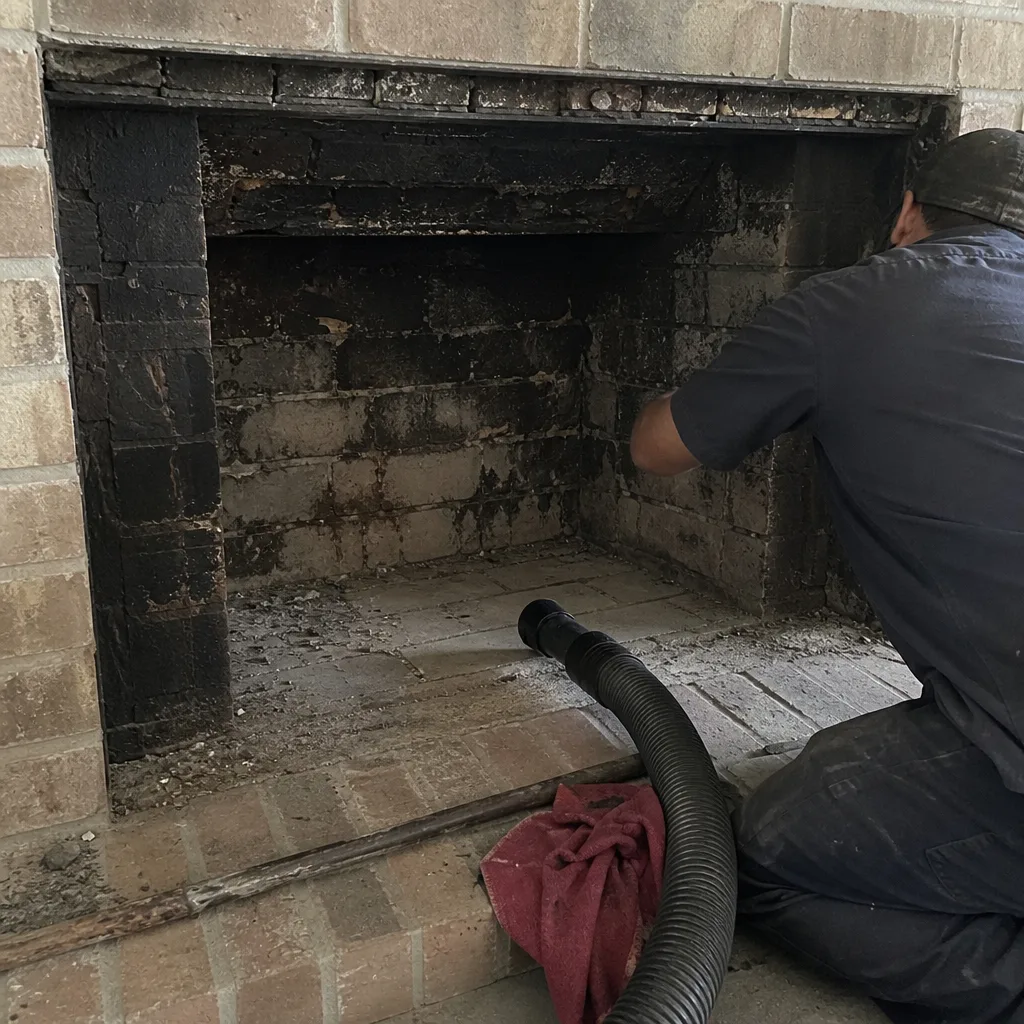 Before
 After
 Before
 After
When to Call a Professional
Call a chimney professional if any of these apply: you haven’t had a sweep or inspection in over a year; you’ve just bought a Carrollton home and don’t know the chimney’s history; you see smoke rolling into the room, a draft problem, or odors from the fireplace; you see cracks, crumbling mortar, or a damaged cap; you hear animal sounds in the chimney; you have a gas insert or an oil flue system; or you’ve had a chimney fire, even a small one. Any of those is a reason to get it looked at before you burn again.
Carrollton Chimney Cleaning offers free estimates in Carrollton. Call (833) 946-9706. We answer 24/7, and fast dispatch is available from 7am to 7pm, Sunday through Friday. We work with the full range of professional materials for sweeps, inspections, and repairs, so you’re dealing with one specialist for the whole job. We identify what’s wrong before we recommend what to fix, and if a repair can wait, we’ll tell you.
Frequently Asked Questions
Once a year is the right baseline for most Carrollton homes, ideally in late summer or early fall before the first fire. Homes that burn heavily, or that have a gas insert or an oil flue, may need a different cadence, which an inspection will clarify. If you’ve skipped more than a year, book one now. Call (833) 946-9706 for an exact quote; estimates are free.
You need a new liner only if the inspection shows the existing liner is damaged, cracked, or no longer doing its job. The way to know is a camera inspection. Ask to see the footage before you agree to any relining work, and if it can safely wait, it should wait. Call (833) 946-9706 and we’ll show you what the camera sees before we recommend anything.
Creosote builds up, and creosote is highly flammable, so a flue fire becomes a real risk. Separately, moisture gets into cracked mortar or a failed crown and starts working on the structure from the inside, and animal nesting can block the flue. None of that announces itself. Call (833) 946-9706 for a sweep and inspection and get ahead of it.
No, not safely. The brush itself isn’t the problem; it’s that the work requires getting to the roof and into the flue safely, and it won’t catch the issues a camera inspection finds. A brush and rod from the hardware store also won’t tell you whether the liner is cracked. Call (833) 946-9706 for a professional sweep instead. Estimates are free.
From the ground, check the cap and crown for damage and look at the exterior masonry for new cracks or missing mortar. Inside, check for dampness or a musty smell. If you see anything new, get it inspected. Call (833) 946-9706 and we’ll take a look. Fast dispatch is available from 7am to 7pm, Sunday through Friday.
Yes, an insurer can and often will ask for maintenance records if a chimney-related claim comes up. Dated records of sweeps, inspections, and repairs show the chimney was maintained, which matters when a loss event is being reviewed. Keep a simple log, and keep the camera inspection reports. Call (833) 946-9706 if you need an inspection to start your records.
The Bottom Line
A chimney in Carrollton lives a very different life from a chimney in a colder climate. The burn season is short, the wet season is long, and the idle months do most of the damage. The checklist that actually protects a Carrollton home is built around that rhythm: a pre-season sweep and inspection after storm season, monthly firebox checks during the burn season, a post-season sweep and moisture check before the humid months, and a log that documents all of it. The professional pieces are two visits a year at most. Everything else is a careful look from the ground or the firebox, and knowing when to call someone. Carrollton Chimney Cleaning handles sweep, inspection, and repair as one service, and our technicians have up to 15 years of experience. Call (833) 946-9706 for a free estimate. We answer 24/7, with fast dispatch from 7am to 7pm, Sunday through Friday.
Written by the team at Carrollton Chimney Cleaning.